Blog Post #8 (Digital Composition Project)

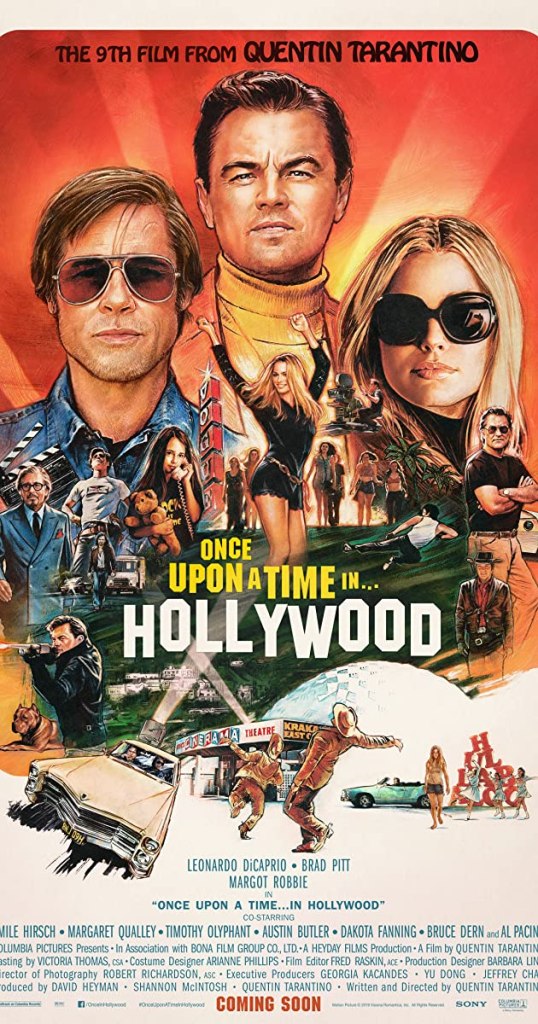
For my digital composition project I decided to create a movie review of Once Upon a Time in Hollywood (https://www.wevideo.com/view/1685351836). The reason I decided to do my project around this movie was because I thought it would be fun to talk about and there was a lot to of content to dive into. On the flipside, there was almost so much to talk about that it became hard to narrow my thoughts or make my commentary insightful and concise. Despite that, working with WeVideo was helpful for piecing together my video in a user friendly way. Way back when in high school I had some video editing experience in a broadcast journalism class. So maneuvering this website was not the most difficult, but I forgot how nitpicky and time consuming the editing process can be.

A definite ‘Ah-ha’ moment was when I realized how to layer text over the images I was using. It may seem simple to do, but going through the process of piecing together the images with the text took a while. I was frustrated when I had to delete images to find the text or delete the text to move the images to fit to scale on the screen. It was a relief when I discovered how to layer the music, images, voiceover, and text in a synchronous way that made the video have a semblance of ‘flow’ to it.

A Digital Literacy that I found myself engaging with was what Jenkins refers to as ‘Play’. I honestly thought that making a video would be a breeze, but the technical aspects of the platform required me to play around with all its bells and whistles. The Jenkins text says, “Part of what makes play valuable as a mode of problem-solving and learning is that it lowers the emotional stakes of failing: players are encouraged to suspend some of the real world consequences of the represented actions, to take risks and learn through trial and error.” Since the task of composing the video was done on my own, the stakes did feel lower than they would have been if there had been more rigidity to the editing process. Had I been in a classroom environment where I had to acquaint myself with WeVideo and produce a polished product in a couple of hours I would have been overwhelmed and frustrated. The time I had to play with the platform led to a less stressful experience and a decent final product.

As always, thank you for reading and I appreciate everyone’s input on both this post and my digital composition.
Pro Blog Post #7

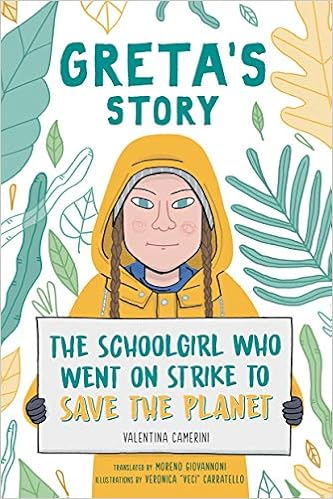
Greta's Story: 9781760642198: Amazon.com: Books

Hello everyone, to be frank, I was a bit limited in my resources for creating a short video off of my Chromebook. Although what I wound up creating is a bit different than the examples shown, I did my best to make something with the resources that I do have. Instead of making a short PSA clip or informative video regarding my CLIFI book selection, I created a Prezi presentation with information about the book.

MY CLIFI PREZI: (https://prezi.com/view/PsVxBnmne8NNebsSyaLX/)

For what my Prezi lacks in spiffy presentation, it was still able to give me the experience of creating something resembling a complete multimodal text. I was able to include images and text that is presented with visually appealing slide transitions. Albeit the format that I chose to use is nothing fancy, I could still see it as being an engaging way to present a book in a multimodal way.

When thinking about copyrighted material used in my presentation, my right to hypothetically use this to teach this would fall under fair use. The images within the slide are from basic google searches, which I am sure fall under technical copyrighted standards, but given they are being used to support the learning goals there is no overt breaking of any rules. As the Hobbs text lays out, teachers shouldn’t fear using copyrighted material because inevitably they will use resources that involve them. The same goes for the little facts I included about the book and Greta Thunberg. In a general sense, the information struck me as appropriate for public use given most of it could be found from a simple google search. Prime examples of such a search include where Greta is from, what she has accomplished, and what her activism goals are.

My process for the presentation included focusing on the main points of the book, including supporting images that align with the text, and essentially tying together the message that the book is supposed to send. My narrative is driven by the format of the presentation of the Prezi. The format resembles a journey from slide to slide that somewhat mirrors Thunberg’s own journey. Although I don’t think that my specific presentation would go a long way in driving engagement for getting behind the Climate Change strike or becoming an activist, the use of such a presentation in a classroom setting could draw more interest or spark greater enthusiasm because the information is being presented in a more colorful, less dull way.

By creating a multimodal text, the instructor has a greater chance of engaging a student due to the immersive nature of the format. With imagery, music, and textual information combined, the likelihood that a student remembers or at least takes something away from the content seems much greater than a bland powerpoint presentation. Although I was not able to produce something totally similar to the examples provided, I am glad I was able to create something that showed me the benefits of using or creating a multimodal text.

Blog Post #5 (Experiences with digital storytelling or other forms of multimodal composition)

Image result for skydiving scared

(Above: This photograph describes my feeling of using/describing how to use multimodal storytelling in an academic setting. Becoming digitally literate has felt like jumping out of an airplane.)

If I am being honest, I have a minimal experience with specific multimodal or digital storytelling in an academic setting. I have not utilized online resources for the specific intent of ‘keeping it all on the web’. But, I have utilized technology for personal forms of digital storytelling in the form of social media. I have been using social media since the year 2011 when I created my Facebook profile. I understand that creating and using social media platforms is not traditionally how we are learning digital storytelling, but bear with me.

When we use social media we are signaling to the world that this is our representation of ourselves. Even if your online persona is not the same as what you are like in real life it is still a representation of yourself because for the general observer, that is their only frame of reference to put together who you are. The way I see social media is as follows; it is almost entirely (if not completely) a joke.

Social media does not truly represent you as a person because an online profile can not completely sum up who you are as a person because people are simply too complex. Not to mention that many times people intentionally ‘tell their story’ through a false lens via filters or exaggerations of how they feel about their daily life. To me, this false or exaggerated representation of self has always reflected as overcompensating for what they wish they had or what they would ideally like to be perceived as. Sorry, my rant is almost over but it is interesting to note the ways in which social media is used because it does reflect a form of digital storytelling that many of us can either relate to or despise. I find this form of digital storytelling to be amusing because of the complete ridiculousness of the whole thing. There are no rules, no values, and no true guidelines on how to tell your story via social media. I may sound bitter or pessimistic, but if you look closely at the absurdity of people’s behavior on social media platforms I feel you may begin to see what I am touching on.

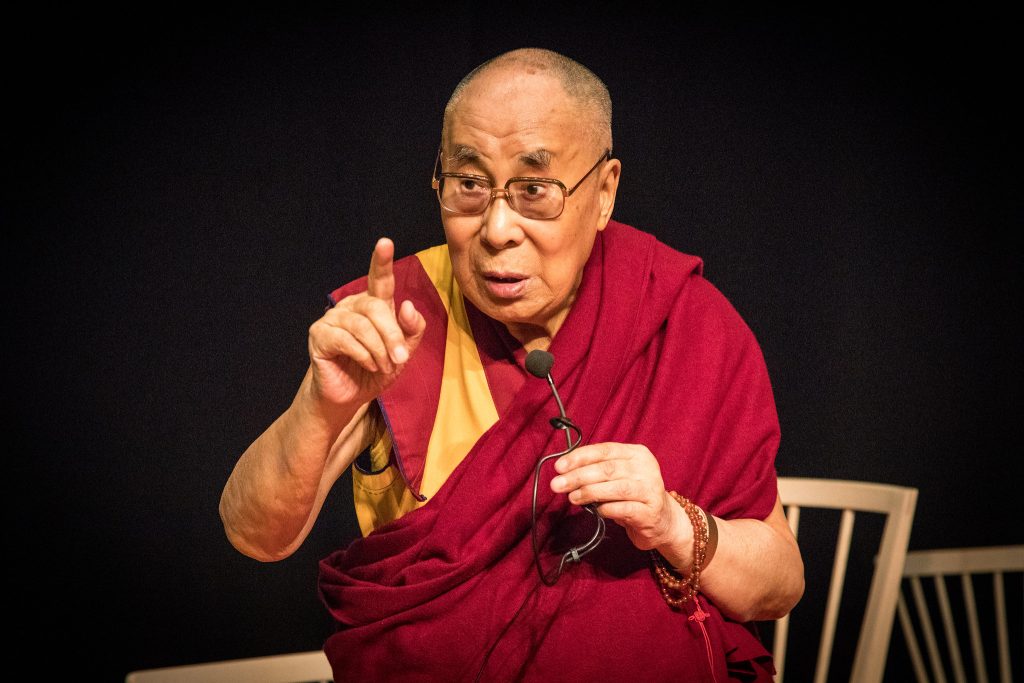
What I am most inspired by are those who use social media for the greater good. two prime examples of this are the Twitter accounts of the Dalai Lama and Barack Obama. The two distinguished men have massive Twitter followings and they perpetually use them to spread goodwill and positive advice. Below are two examples of tweets from both men that I have found to be powerful because of their healing, kind, and compassionate nature.

Image result for the dalai lama

Dalai Lama: “I urge young women to accept leadership roles. We need you to promote love and compassion. Realize my dream—that the 200 nations of the world be governed by women. There’ll be less war, violence, and economic and social injustice because strength is rooted in love and compassion.” (March 8, 2020)

Barack Obama: “Protect yourself and your community from coronavirus with common sense precautions: wash your hands, stay home when sick and listen to the @CDCgov and local health authorities. Save the masks for health care workers. Let’s stay calm, listen to the experts, and follow the science.” (March 4, 2020)

Image result for obama basketball

These two men, one the spiritual leader of the Eastern half of the planet Earth and the other our former President, are using their platforms to promote actual values, ideals, and in Obama’s case precautionary measures for a developing issue in our country. I am not saying that these two are the gold standard or guiding light among every person in power, but I continually see them use their voices to represent those that do not have as strong of a voice as theirs. It is empowering to those who do not have a voice and to those who want to defend those that don’t always have the opportunity to have their voices heard.

The Dalai Lama is promoting Women Empowerment and Barack Obama is promoting safety tips during an international pandemic crisis (“crisis”). You can argue all you want about the men themselves but I do not think you can argue their messages of compassion and positivity.

Their example inspires me to promote the same ideals in my classroom and to also promote students using their voice for good. So often we see today people using their voice to cancel other voices out and it is truly disheartening and disappointing. By showing that some people use their platforms and voices for good, I see the example being set by the Dalai Lama and Obama being both infectious and advantageous for writers attempting to use multimodal forms of writing such as social media.

Blog Post #4 (Flower & Hayes)

See the source image

When considering how I write and the mental process that the activity includes, I am reminded of the above photograph. That is Zach Galifianakis from Todd Phillips’ cult classic comedy The Hangover. In that scene Allen (played by Galifianakis) is at a casino figuring out how to count cards and effectively rob the casino. That is not exactly how I see myself as a writer, but the image clearly represents my often jumbled thoughts. I prefer to write in a way that clearly expresses the point (of whatever I am writing) in a natural way. That might sound vague, but the process basically includes explaining a lot of points that connect to my main point, thus strengthening that main point. My theory is that people do not think the way that they write, otherwise oral communication would be kind of dull or robotic. People tend to write the way they have been taught to write because they were asked to do so for an assignment or a general task. Although that form of writing does serve a meaningful purpose in most contexts, that does not make it the most fun or interesting to read.

The aspect from the Flowers & Hayes journal that I relate to the most is their explanation of Planning. They define planning as ‘the act of building this internal representation… The most obvious is the act of generating ideas, which includes retrieving relevant information from long-term memory.’ Although it may seem obvious, planning is so vital to any type of writing, because without a plan in place there is no sense of general direction.

See the source image

The way I plan is somewhat unique or ‘lazy’. I initially plan by getting one big idea in my head and then I tackle the other aspects as I go along. This way of planning works the best for me because I find myself writing the strongest when I am free from constraints or strict structure. Now, I recognize my use of the word lazy (above) is in parenthesis. The reason for that is it seems so many writers or instructors of writing believe there has to be one correct way to write. Sure there is a correct way to write a standardized essay, a research paper, or a critical analysis of Carlin, but I find it hard to believe a writing process or writing in its most general sense to have a definitive right or wrong way. Maybe that is because I view writing as more artistic than straight-forward, but it strikes me as backwards to argue there is a correct and an incorrect way to write.

See the source image

I digress. The reason I feel as strongly as I do is because I genuinely like writing so much and I think many people don’t like writing because of the restrictions that academic writing places on them. It is hard to write a great essay for AP English and it is hard to write a scientific research paper, but if you write those in a way that is fun/interesting for you then I think writing (as a practice) becomes far less daunting and far more accessible.

Here I have included a couple of links that represent different ways to approach writing. One link is to an article about why writing is hard, because sadly, it is hard. The other link touches on ways to make writing more fun. This link is to a blog by a writer who once thought writing was not fun simply because it was hard. Once he changed his perspective on the challenge of writing, writing became more fun for him.

Links:

Why is writing hard?: https://oupeltglobalblog.com/2015/02/16/why-is-writing-so-hard/

Ways to make writing fun: https://medium.com/the-mission/10-simple-ways-to-make-writing-fun-1b53b426ac07

Blog Post #3 (Experience as Writing Coach)

See the source image

So far my experience as a writing coach has been interesting, although less involved than I had anticipated it to be (at least so far). I have received responses from 3 of the 6 students I have reached out to, and the back-and-forth responding has been sporadic. That said, it has been somewhat difficult to stay on top of each writer as an individual because the timing of when I receive their writing has been alternating between student, which class they are in, and what their specific writing assignment is about. Overall, managing those nitty gritty aspects has been mildly challenging. When I have received responses, the interactions are always beneficial and constructive for myself as a writing coach and hopefully for them as the writer. Seeing as they are a handful of years younger than I am, I can visibly see the difference in exposure to writing. It’s not their fault that I am several years older and have more experience reading/writing, but their level of understanding does seem to reflect a high school level status. Some of the writers have put forth more effort than others, and that effort certainly shows in the strength of their narratives. Those that have given more time to how they want to phrase their stories have provided more to work with than those that showed minimal effort. As their coach, it has been my job to point out the areas that did work (despite the overall quality of the paper). The main thing to keep in mind is that they are not professionals and neither am I. It’s nice to be in a position to offer insight, but I have stressed in my comments to them that my comments are suggestions and not the gold standard of writing. What these writers have shown a need for is an interest in what they have to say through their writing. I have done my best to draw connections to their writing by adding personal comments about how I could see myself in their shoes in certain scenarios that they have written about. The main thing to keep in mind for me as a coach is to not be overly judgmental of their skill level. I have been more focused on getting them to expand on the thoughts and ideas that they have already expressed.

For this week’s post, I found an article from Thought Catalog titled ’10 Tips For A Novice Writer (From a Novice Writer)’. I see this article being helpful in terms of receiving concrete advice and adapting a game-plan when writing. Thanks for reading! https://thoughtcatalog.com/ayodeji-awosika/2015/07/10-tips-for-a-novice-writer-from-a-novice-writer/

Blog Post #2 (Writing Coach Profile)

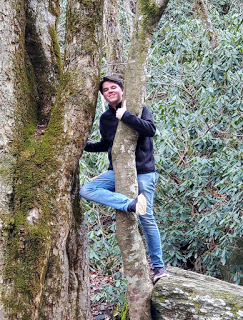
To describe myself as a student, I would characterize myself as thoughtful, inquisitive, and talkative. I find it easier to retain material if I am actively engaged by writing down questions, participating in class discussion, and writing down notes in my own words. As a writer, I tend to insert a lot of my own ‘voice’. What does that mean exactly? I write closely to the way that I think and speak. For me, it provides a particular ease to the way the sentences are read. If you read a sentence that is written the way a person speaks, it becomes easier to follow (in my humble opinion). As a future educator, I hope to be able to help students find their own writing voices. Often times students will use writing as a means of expressing how they wish they could speak versus how they speak in real life. I can certainly relate, and through my teachings I hope to help students find what works for their writing. As far as experience goes, I am not trained in the art of tutoring or editing writing, but given my major area of study, many friends have come to me for advice and in some cases to revise their work. So, my experience is minimal, but my personal experiences with reading and writing should surely help with the coaching process. (Pictured is myself hugging a tree in North Carolina this past December.)

Below are a couple of links that may be helpful in understanding the writing coaching process.

Links:

(The Role of a Writing Coach): https://www.dailywritingtips.com/the-role-of-a-writing-coach/

(Tips on finding your ‘Writer’s Voice’): https://nybookeditors.com/2017/06/find-writers-voice/

Image

Pro Blog #1 (blog post two found near bottom. Still figuring out how to format this.)

Hey class,

Here is my first blog Pro Blog Post. Enjoy! Comment if you feel like it.

Pro Blog Post #1

What experience do you have working with online social media or digital composition as a way to connect with others? As a way to promote social action? 

Well, I have been on social media since the year 2011. So that would mean for the better part of the last 10 years I have been ‘involved’ with social media interactions. Through Facebook, Instagram, Twitter, and Snapchat, I have somewhat grown up trying to understand what these platforms are used for and how they can be best used to represent myself as a person. I try to keep my online personality separate from my personal personality more often than not. However, I do see these platforms as a means of self expression, and with that self expression comes the need to express what I see as right and wrong. So when I see injustice politically, like Donald Trump instigating a Twitter fight with a 17 year old Greta Thunberg, yes, I will express my disdain for a President to act that way on my social media. Not because I believe I have a true following that cares what I have to say, but because I believe things like that are intolerable on a fundamental human level and everyone should be offended by it as well. I know that may seem rather aggressive or self-serving, even narcissistic, but in a way, that is exactly what social media profiles are. They are platforms for you to voice yourself, so why not use them to stand up or express what you believe in?

(e.g. blogging, Pinterest, video production, etc.)? Drawing on the readings for this week, describe the potentials and pitfalls you see for digital media in urban, English Language Arts (ELA) classrooms. (REMINDER: Connect to readings and include at least one image and resource link in all blog posts.)

The harm in using digital media in an urban setting, specifically ELA classrooms, are hard to calculate. I see more harm in the potential abuse of what digital media can provide a student. What I mean by this is the instantaneous nature of digital media and how that comes into play with how a student learns critically. If a student can instantly find an article, website, or any online resource that perfectly fits to what they believe in – let’s say Climate Change being real (which it is) – and they use it to only combat those who say Climate Change does not exist, then in an odd way they are only reaffirming their own beliefs and not seeing things from the other side. I guess maybe this becomes an issue of a student developing critical thinking skills. Can a student develop a critical mind when they have instant gratification? Maybe they can and maybe they cannot. There are a lot of factors that come in to play. I suppose the best answer, or the most logical answer would be having specific guidelines as an instructor as to how to use and digest the digital media that you introduce or allow in the classroom. If not monitoring what the students are “digitally digesting”, a teacher should at least instruct on what is good versus what is bad information, source wise. For instance, wikipedia may be helpful for certain things, but it won’t give your argument a substantial amount of weight/credibility if that is the only source you use. My take is, be skeptical of the information you are receiving, using, and interpreting online, because that will develop a critical mind and a critical approach to understanding digital media as a whole.  

Links:

Teach Hub Critical Thinking

https://www.teachhub.com/how-improve-students%E2%80%99-critical-thinking-skills

Trust radius on if you can trust social media platforms as information networks

https://www.trustradius.com/buyer-blog/should-you-trust-social-media-trustradius-poll

Digital Composition: (Currins 547 Spring 2020)

By George Connelly

Welcome to my Blog: Here I will be posting everything that is required for class. Let’s hope it can be both fun and insightful. Below are the headings for the weekly requirements that need to be included in each blog post.

Connect to Course Readings

Images

Resource Links

Respond to peers

Design a site like this with WordPress.com
Get started